
U-TREE Puerto Rico bets on edible forests to combat the heat
extremes in the southwest of the island
The initiative seeks to combine urban reforestation with food production in
communities in eleven municipalities in southwestern Puerto Rico.
By: Yamilet Aponte Claudio
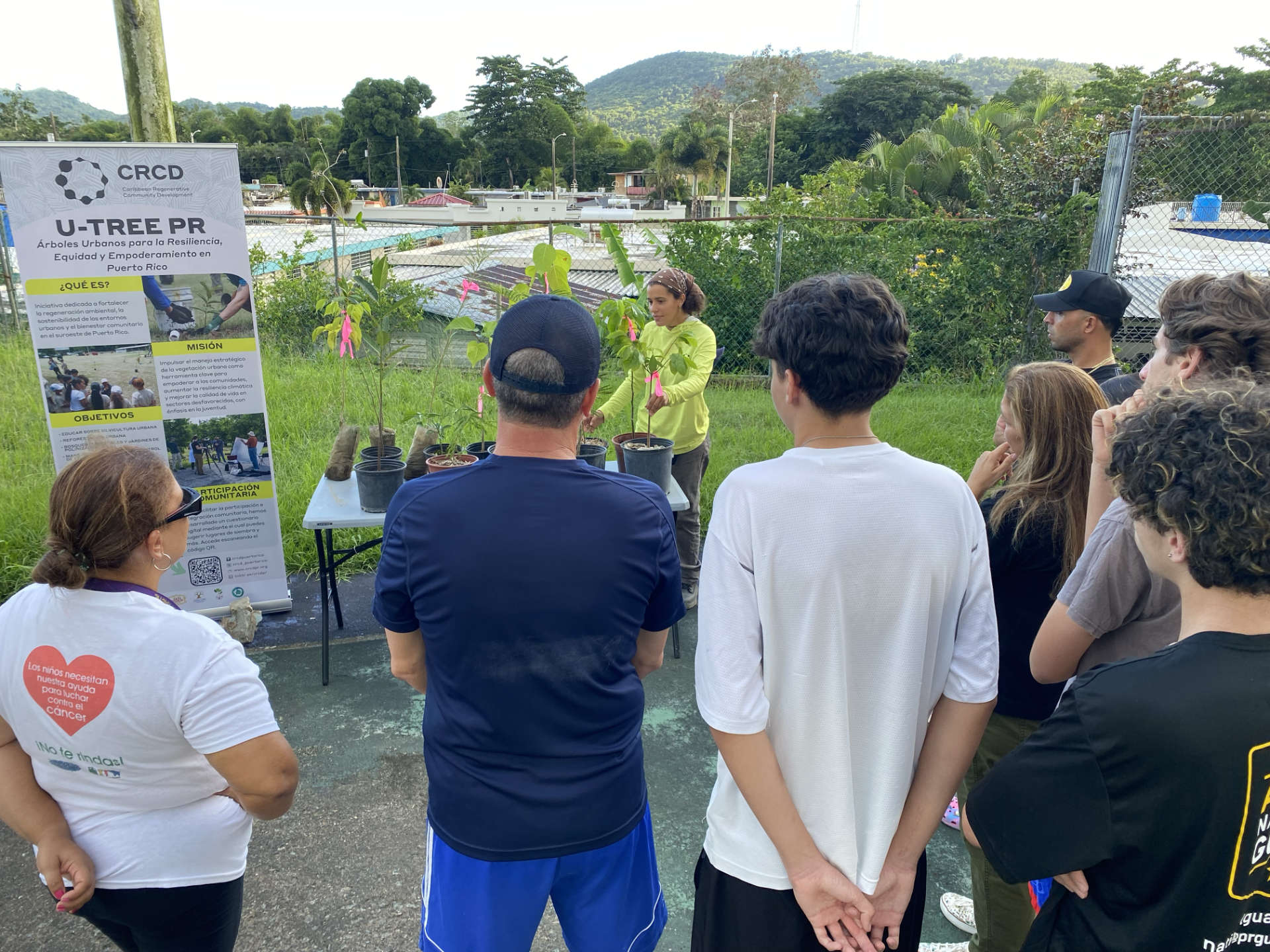
The Urban Trees for Resilience, Equity, and Empowerment in Puerto Rico (U-TREE Puerto Rico) program seeks to combat extreme heat and strengthen food security faced by communities in southwestern Puerto Rico through the implementation of food forests.
The U-TREE program is part of the Caribbean Community Regenerative Development (CRCD), which seeks to integrate a strategy that combines green infrastructure, community resilience, food security, and food sovereignty.
The project, funded by the U.S. Forest Service through a grant of approximately $7 million that runs from 2024 to 2029, is being implemented in eleven municipalities in the southwestern region, from Peñuelas to Las Marías. According to Yasiel Figueroa, manager of the U-TREE Puerto Rico project, the initiative was launched to address the specific needs of a region facing significant environmental and socioeconomic challenges.
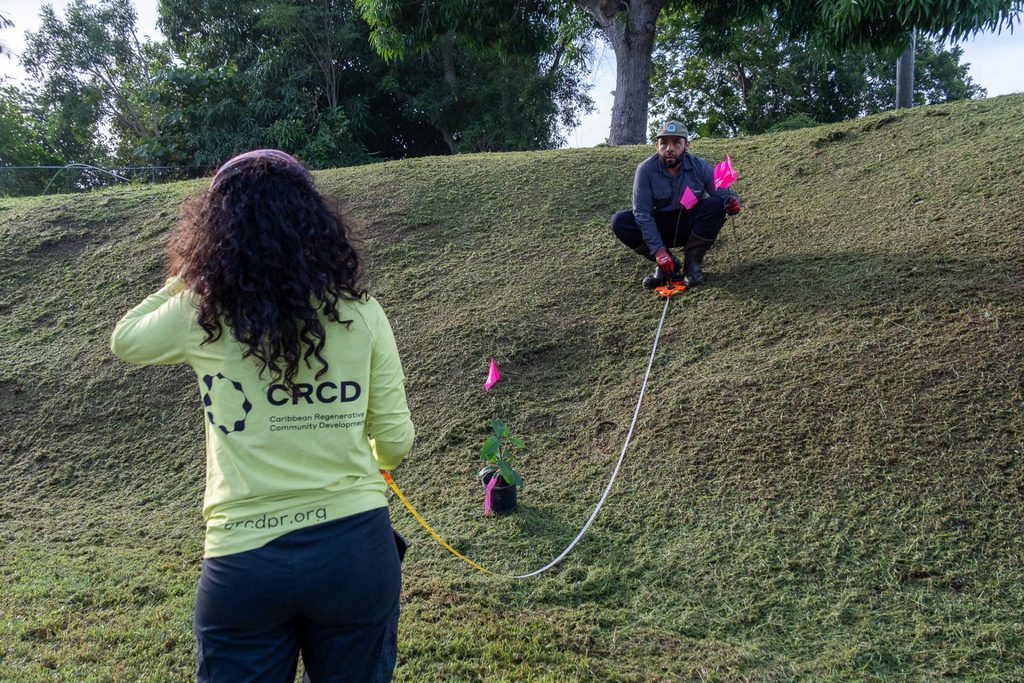
“Many of these types of projects focus on the metro area. That's why, as an organization, our focus is the southwest. Our base is in San Germán, and we like to dedicate the efforts and funds we obtain to the southwest,” Figueroa expressed.
Beyond tree planting, U-TREE Puerto Rico drives urban forestry initiatives, public space restoration, environmental education, and community participation. Through partnerships with municipalities, schools, and non-profit organizations, the project promotes the creation and care of green infrastructure as a strategy to reduce the effects of extreme heat, improve quality of life, and strengthen community resilience in the face of climate change.
The project is being developed in one of Puerto Rico's most vulnerable regions. Recent studies by the State Data Center show that municipalities in the west and southwest have some of the highest aging rates on the island, while data from the U.S. Census Bureau indicates that more than half of Mayagüez's population lives below the poverty line.
This is compounded by the fact that the National Weather Service has warned that heat indices in the western and southwestern coastal areas of Puerto Rico have reached between 100°F and 111°F during extreme heat events recorded this year, increasing the risk of heat-related illnesses. In light of this outlook, U-TREE seeks to use trees as a tool to strengthen climate resilience, improve public spaces, and promote healthier communities.
Within that vision emerges the edible forest component, an initiative that seeks to establish community spaces capable of producing food through the integration of fruit trees and other species adapted to the local environment.
“An edible forest is a place, an area that produces food, mainly with trees of different strata. Taller trees are combined with shorter trees to create a system that can sustainably produce food,” explained Figueroa.
According to the project manager, over the next few months U-TREE will open calls to identify communities interested in developing these types of spaces.
“We are going to launch a call for communities that already have a project underway or are interested in cultivating a common space that produces food so we can support them in that process, mainly with trees,” he indicated.
In addition to increasing the availability of fresh food, edible forests could help mitigate some of the effects associated with extreme heat and the lack of green spaces in urban communities.
Figueroa pointed out that, although the initial goal of the project contemplates planting 20,000 trees, the experience gained during the first few years has shown that the impact goes beyond a number.
“There will be cooler communities, there will be more food in public areas, there will be places that used to flood and there will be a little less flooding. We also expect more pleasant and safe spaces for the communities,” he maintained.
For her part, the coordinator of U-TREE Puerto Rico's nurseries, Karina Carrasquillo Pérez, highlighted that the initiative also seeks to strengthen community ties through shared access to food.
“If there's an avocado tree there, it shouldn't be just for one person; it should be for the community. I believe it's about continuing to build community, so everyone gets to know each other, and it's not just a one-time meeting,” she expressed.
Currently, U-TREE collaborates with five schools in alliance with the Department of Education and aims to continue expanding its environmental education efforts among youth and communities in southwestern Puerto Rico through new initiatives they hope to launch in the coming months.