
At the time of this edition, there are open positions for the three teams that make up the Puerto Rico Conservation Corps
By: Gabriela Meléndez Reyes
Academic preparation in the field of science is usually loaded with theory, readings, and books. But it is in practice where, as a beginner, you determine if the branch you practice is truly what you like. Such was the case of Louis Flores, member of the U-TREE team of BoriCorps.
BoriCorps, also known as the Puerto Rico Conservation Corps it is a non-profit organization dedicated to recruiting young people aged 18 to 24 so that they can gain professional experience and develop in the field of conservation.
Sara Vélez Galíndez, regional coordinator and restoration director for BoriCorps, is part of the organization's first cohort established on the island. At that time, in 2021, it all began at El Morro in San Juan, Puerto Rico.
“I started as a member, became club leader and then to coordinator. And now, well, I'm in the position of restoration director... there are many wonderful things I've experienced with the crews”, shared Vélez, recalling his five years with the organization.
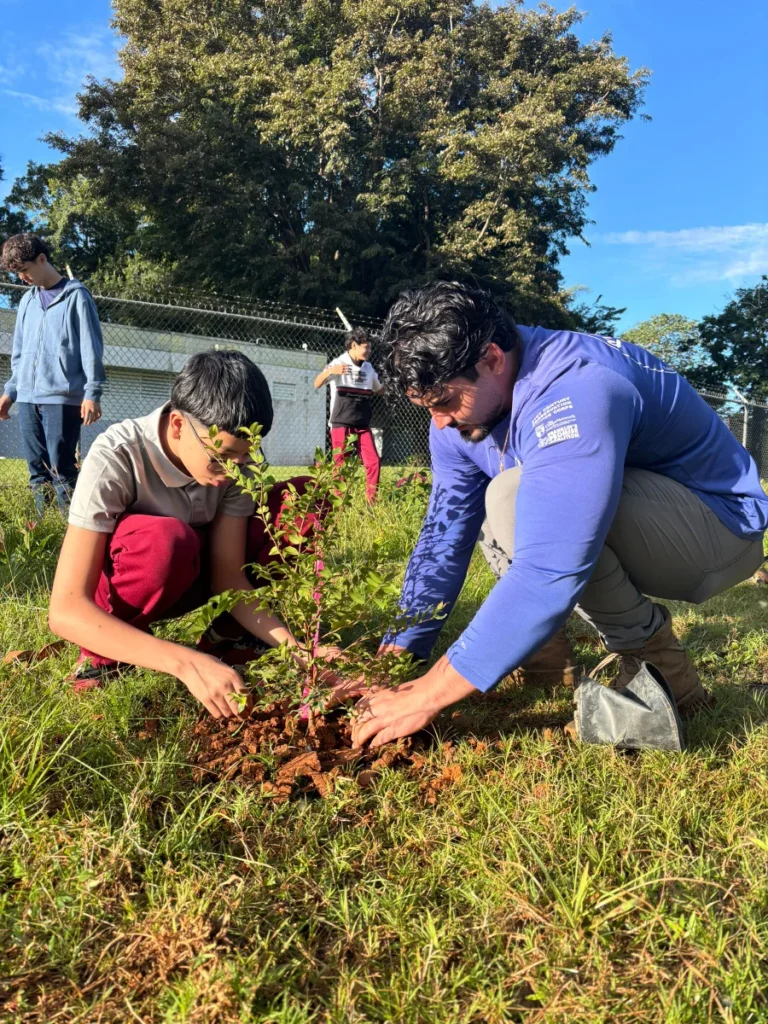
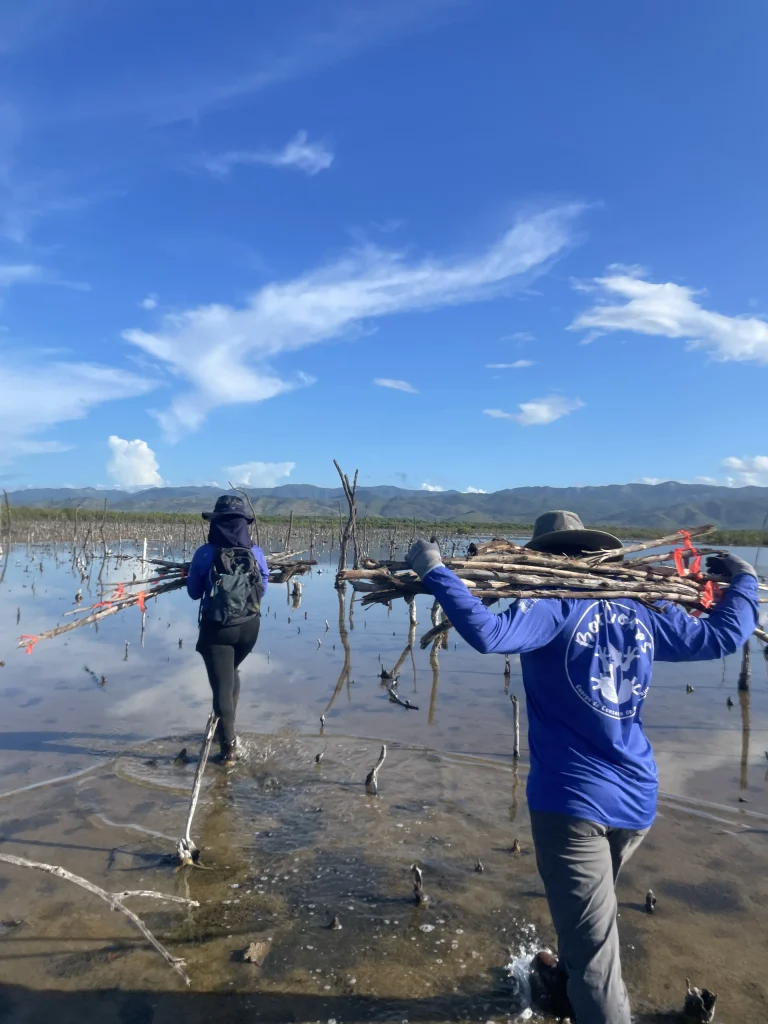
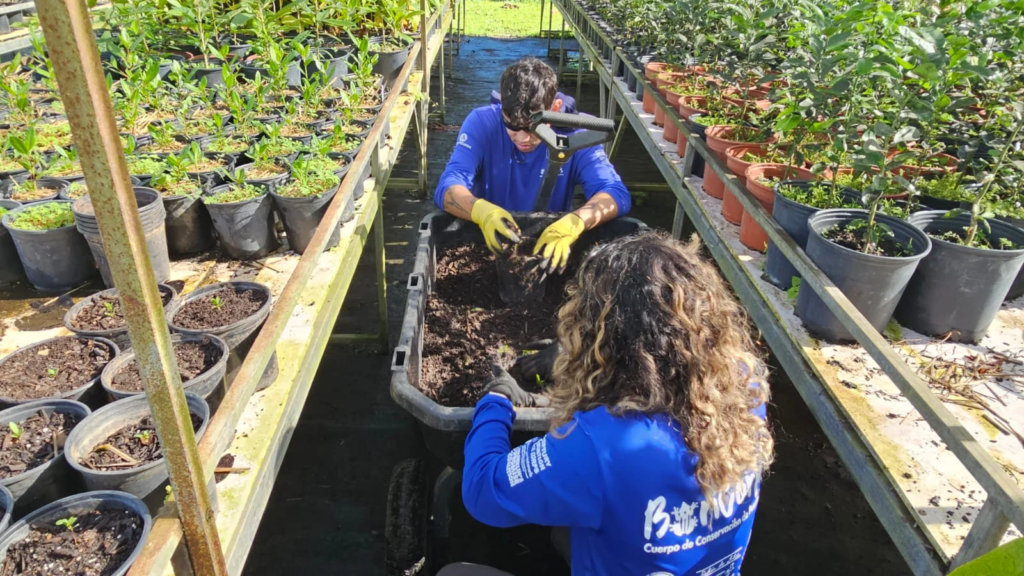
Currently, however, the organization is divided into three projects. The first is the Jobos Bay National Estuarine Research Reserve project in Salinas. The second consists of urban reforestation through the U-TREE team; it is carried out in eleven municipalities in the southwest of the island. And the third is based on working in the nurseries of Protectores de Cuenca, a community-based non-profit organization with the goal of restoring and protecting watersheds in Yauco.
Regarding the number of participants who have benefited from the organization, Vélez Galíndez shared that the figure is around 50. One of them is Darilís Martínez, who holds a bachelor's degree in Biology and two minors, one in Natural Resources Conservation and one in Sociology and Environmental Public Policy from the Colegio de Mayagüez. Martínez is currently a BoriCorps crew leader and a member of the U-TREE team.
“Here we not only do fieldwork, we also do data collection, we do data analysis. The scientific part is quite comprehensive and everything is focused on conservation, restoration, and the environment,” Martínez explained.
In particular, the U-TREE project seeks “the conservation of green spaces in urban areas,” the director stated. This is in order to impact communities and raise awareness about heat waves in the southwest by propagating and planting 20,000 trees and shrubs in urban areas.
For Jean Cedó, brigade leader and who has studies in Agricultural and Environmental Systems from the College, of the best experiences he has had with the Corps is visiting schools in southwestern Puerto Rico.
“We have gone to about five or six schools and we always do a small activity with the kids….we have gone to the schools in Lajas, San Germán, Hormigueros and Cabo Rojo. Usually we go to give a brief explanation of what we do and then we plant with them, detailed Cedó, who also specified the importance of instilling in the youth an awareness of conservation.
The challenge of putting down roots
The task of restoring is not simple. The U-TREE participants interviewed alluded to surveys they conduct with communities to find out their opinion on green spaces and trees, and to know which trees they prefer to see in their sector.
“On many occasions we have been rejected,” Flores stated. The controversy with the neighbors lies in the fact that “several members of the community often do not agree with it [the planting] due to a lack of knowledge,” Cedó pointed out.
Among the concerns raised by residents is that they view the planting “as something that is going to make a mess, drop leaves, and perhaps roots will break sidewalks,” mentioned Martínez, who also explained that not all trees have roots that cause this type of damage.
Therefore, community perspectives play a leading role in the restoration process, and the youth urge them to be participants in the process. However, although the work can entail challenges, the participants agreed that it is a great educational experience.
At the time of this writing, all three BoriCorps teams have open positions and interested individuals can apply through the link in the bio of the corps' Instagram page (@boricorps“The forms never close, they always stay open. Constantly, every three months or every six months, I contact people to do interviews,” explained Vélez Galíndez.
The terms are for 1,200 hours, however, the organization has the possibility of extending them. To join, each team has its requirements, and positions are subject to a 300-hour AmeriCorps probationary term.BoriCorps, also known as the Puerto Rico Conservation Corps it is a non-profit organization dedicated to recruiting young people aged 18 to 24 so that they can gain professional experience and develop in the field of conservation.