
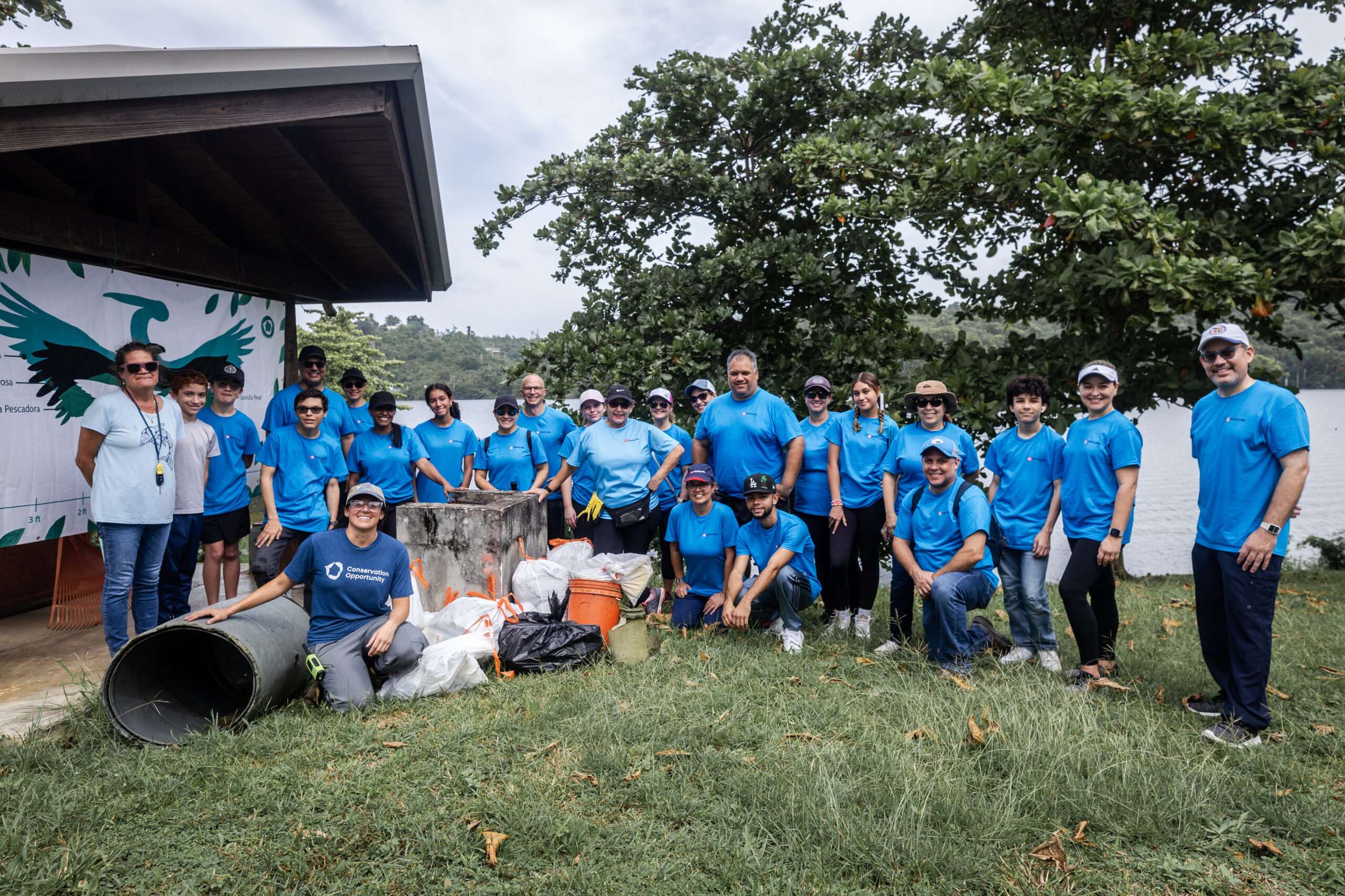
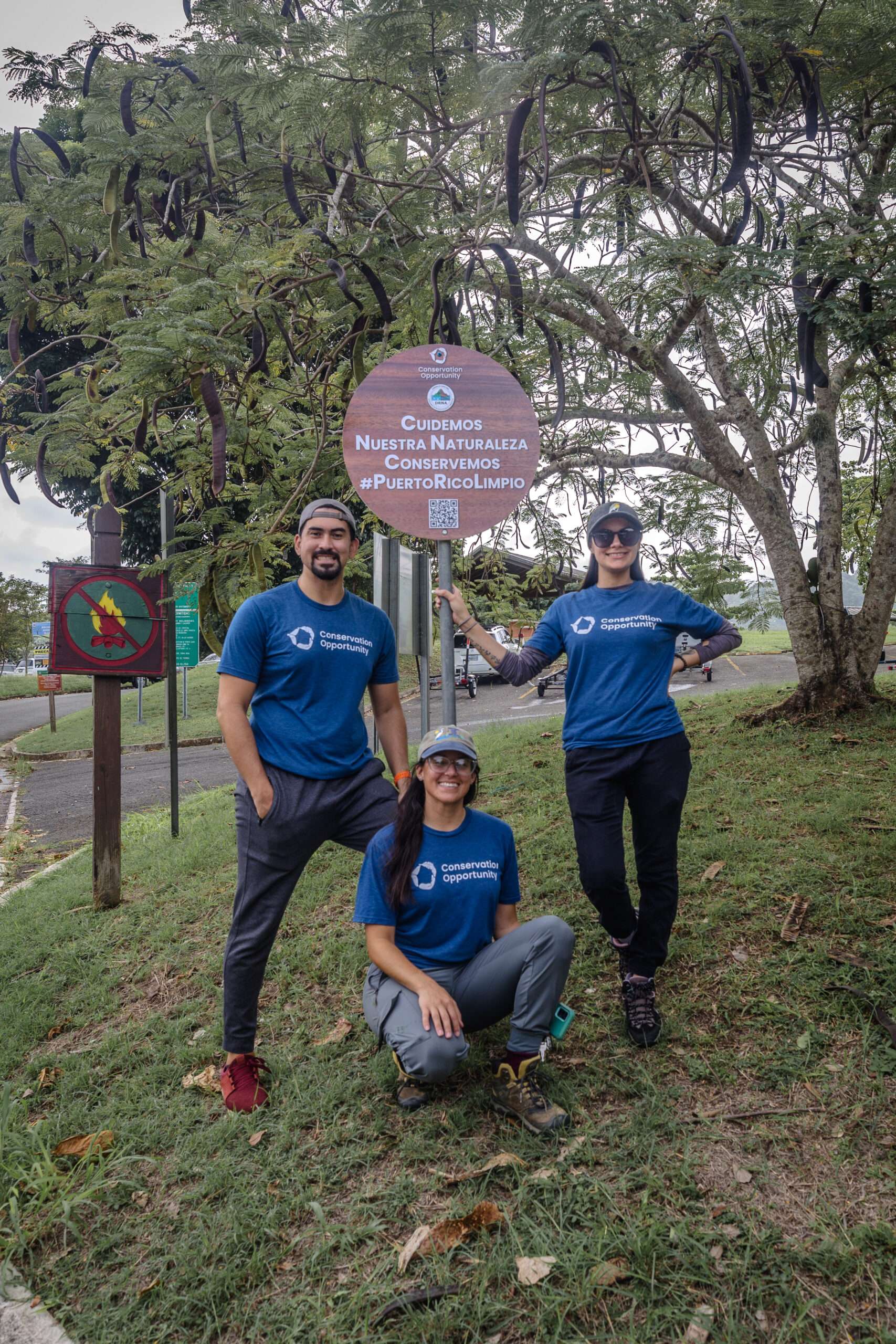
Conservation Opportunity (CO), together with the Department of Natural Resources (DNER) and the municipality of Toa Alta, carried out, on November 18, 2023, a day of cleaning up human waste and installing signs emphasizing the “Enjoy with Conscience” campaign as an effort to preserve and protect the ecosystem of the La Plata Reservoir Wildlife Refuge in that municipality, as well as carrying out aquatic activities such as fishing.
During the event, more than 30 volunteers joined together to clean up the area, collecting more than 205 pounds of debris. In the same way, they were able to help a juvenile osprey in rehabilitation that consumed the aquatic animals caught by the participants.
“This collective effort not only contributed to beautifying the natural environment, but also had a significant impact on the conservation of local wildlife,” said CO founder Fabiola Torres Toledo.
He added, “Trash makes spaces look less pleasant. When you find a clean place, it creates more peace. Also, keeping areas clean protects our natural resources such as water quality, and the health of the animals and plants that share these spaces with us humans.”
According to Banco Popular's volunteer coordinator, Luisa Oyola, the event gave her the opportunity to reflect and relax with the environment.
“It was an experience where they stopped to discover some activities where they do good, but, at the same time, it helps you to take a moment to find peace,” said Oyola.
He added that “This event was a learning circle where you learn at the beginning and continue going through some stages and then at the end, when the activity is closed, all the garbage that was collected is weighed and apart from that the experiences are shared”.
On the other hand, the La Plata Reservoir in Toa Alta is one of the most important dams in Puerto Rico, since it is a vital source of drinking water for thousands of families in the municipalities of Cataño, Bayamón, sectors of Toa Alta and a large part of Toa Baja, according to a press release by former Rep. Angel “Gary” Rodriguez Miranda.
Along the same lines, the reservoir's waters originate in the municipalities of the central mountainous zone extending some seven miles with maximum depths of up to 100 feet.
“La Plata Reservoir is managed by the Aqueduct and Sewer Authority and is protected by the DNER,” explained La Plata Reservoir Wildlife Refuge Management Officer Marinelly Valentin.
The official emphasized that the department conserves, protects and restores the area to have good water quality so that people can receive water in their homes while the second use of the reservoir is recreation.
“The activities we work on here are fishing, bird watching, paddle sports, and nature walks following a set of rules,” Valentin said.

The Management Officer also points out that humans “cannot live alone and depend on wildlife for survival. For this reason, they are working hard on habitat restoration practices through plantings in the reservoir, including the endangered plant, black cobana (Libidibia monosperma), which benefits nature.
Currently, DNER is involved in various projects at the reservoir ranging from education, bird census and rehabilitation, to tree planting, creation of pollinator gardens, identification of fungi due to their sudden appearance, and community activities such as service hours, contact with nature, and community gardens.
Also, a few months later, they had the opening of a “sonorous” sidewalk” for the visually impaired. Valentín points out that blind people have a special ability to distinguish sounds and can even contribute to the bird census by means of these sounds. Finally, they developed a fishing workshop program where they teach the participant from the most basic method (bamboo fishing) to the most advanced (“fly fishing”) in fishing.
At the end of her orientation to the public, Marinelly Valentin stressed the importance of the presence of CO and the volunteers present: “We really can't do it alone, we don't have the staff for the amount of work there is, that's why the volunteer work, the Eagle projects (Boy Scouts of America), help us to be able to continue here”. He also stressed that the public is welcome to visit this wildlife refuge.
###
Do you want to be part of Conservation Opportunity and contribute to the conservation of our natural resources? You can contact us by sending an email to info@conservationopportunity.org or through our social networks at Instagram, Facebook o LinkedIn. In addition, we invite you to follow us on these platforms to receive notifications about events and activities.
If you wish to receive information directly to your e-mail, you can fill in the following form form.